2nd Mention – 5th Place / 2025
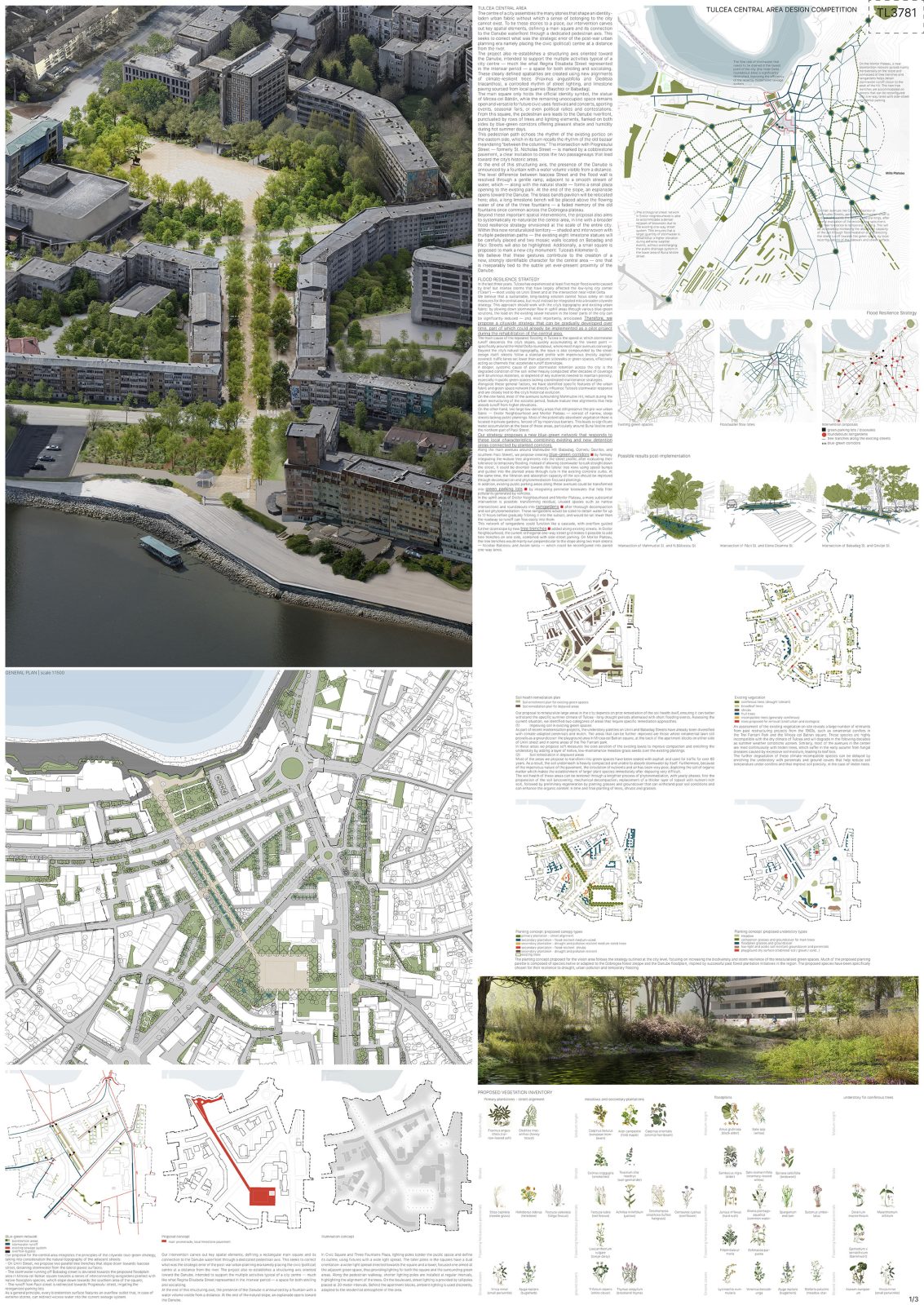
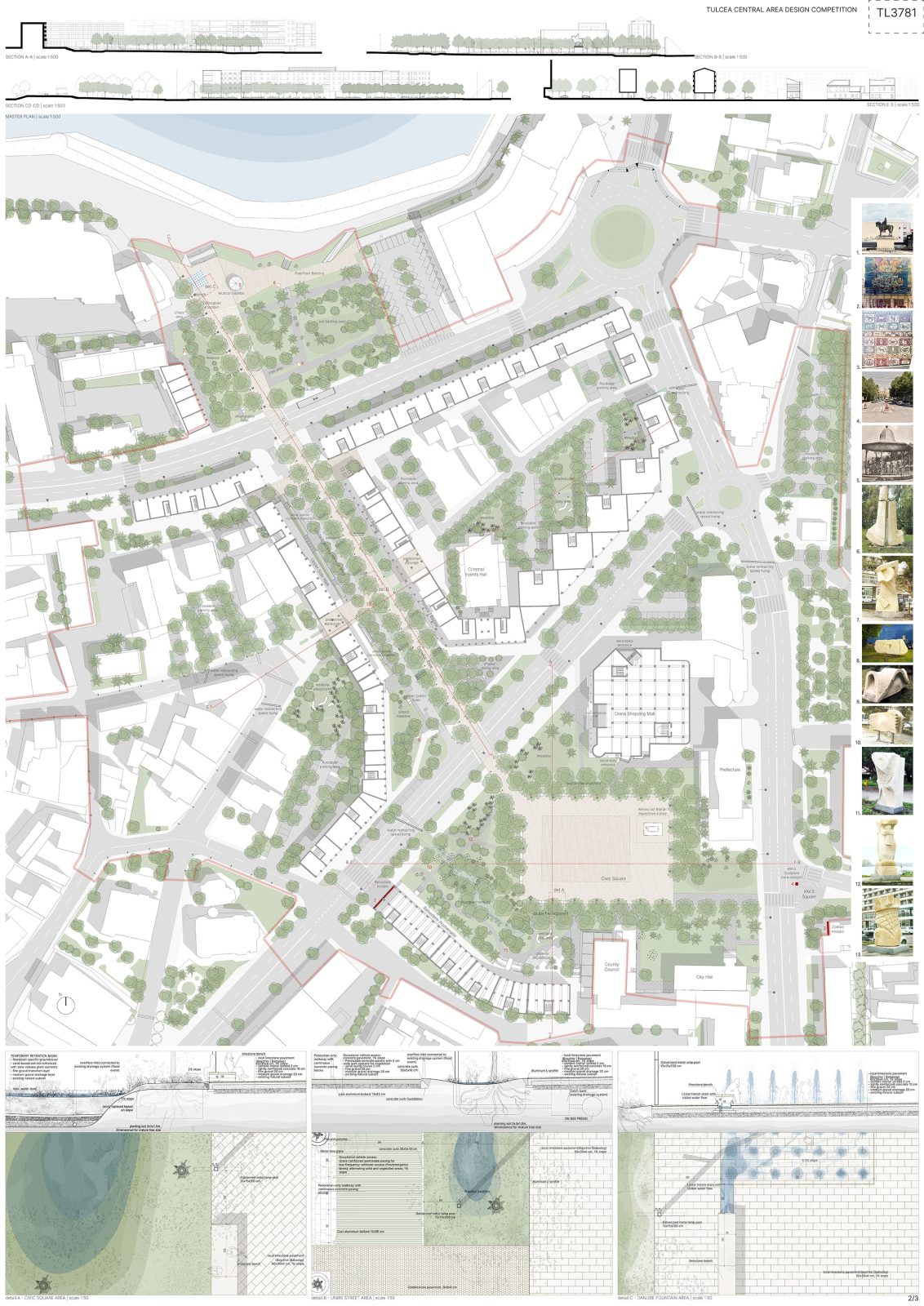
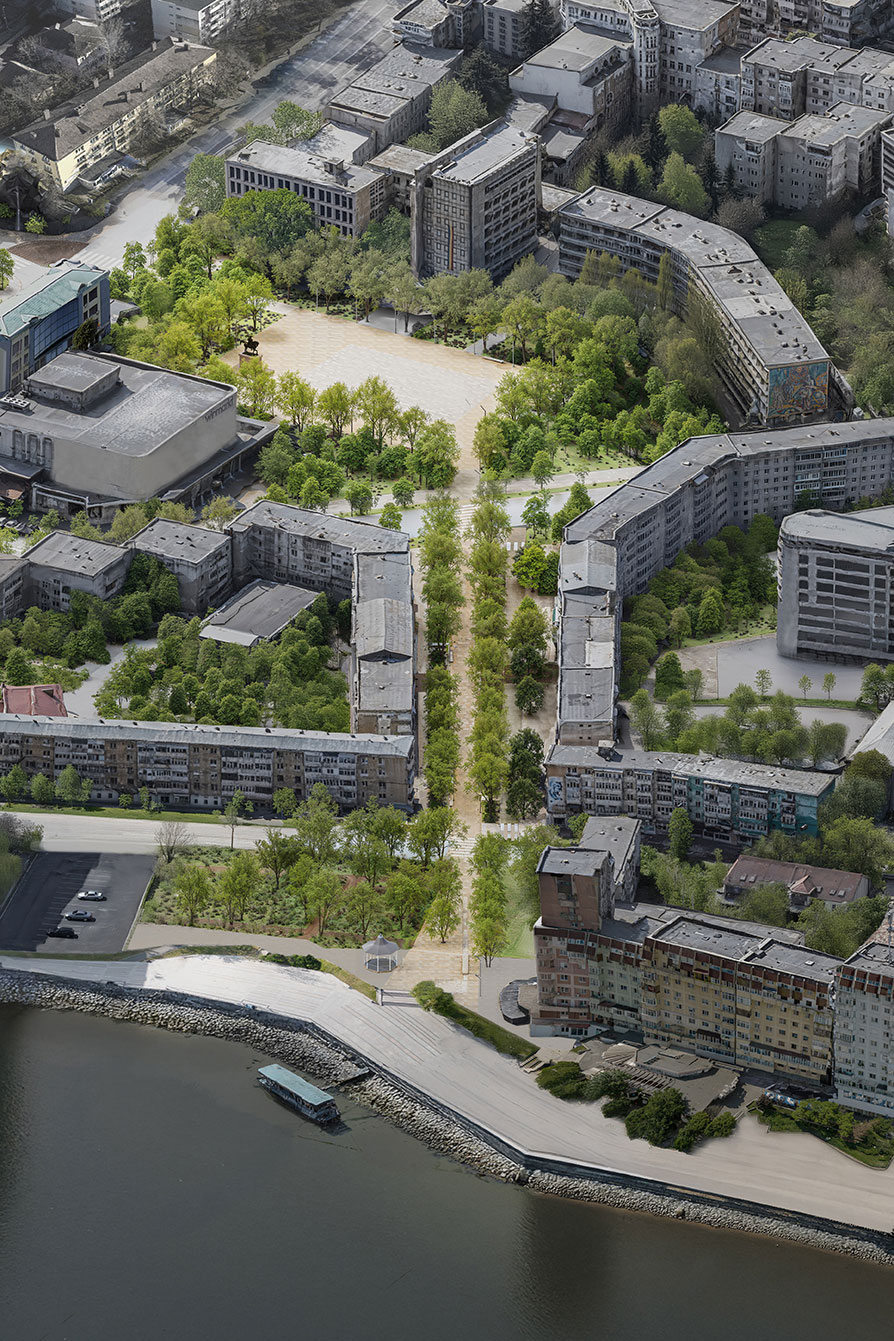
The centre of a city assembles the many stories that shape an identity-laden urban fabric without which a sense of belonging to the city cannot exist. To tie these stories to a place, our intervention carves out key spatial elements, defining a main square and its connection to the Danube waterfront through a dedicated pedestrian axis. This seeks to correct what was the strategic error of the post-war urban planning era namely placing the civic (political) centre at a distance from the river.
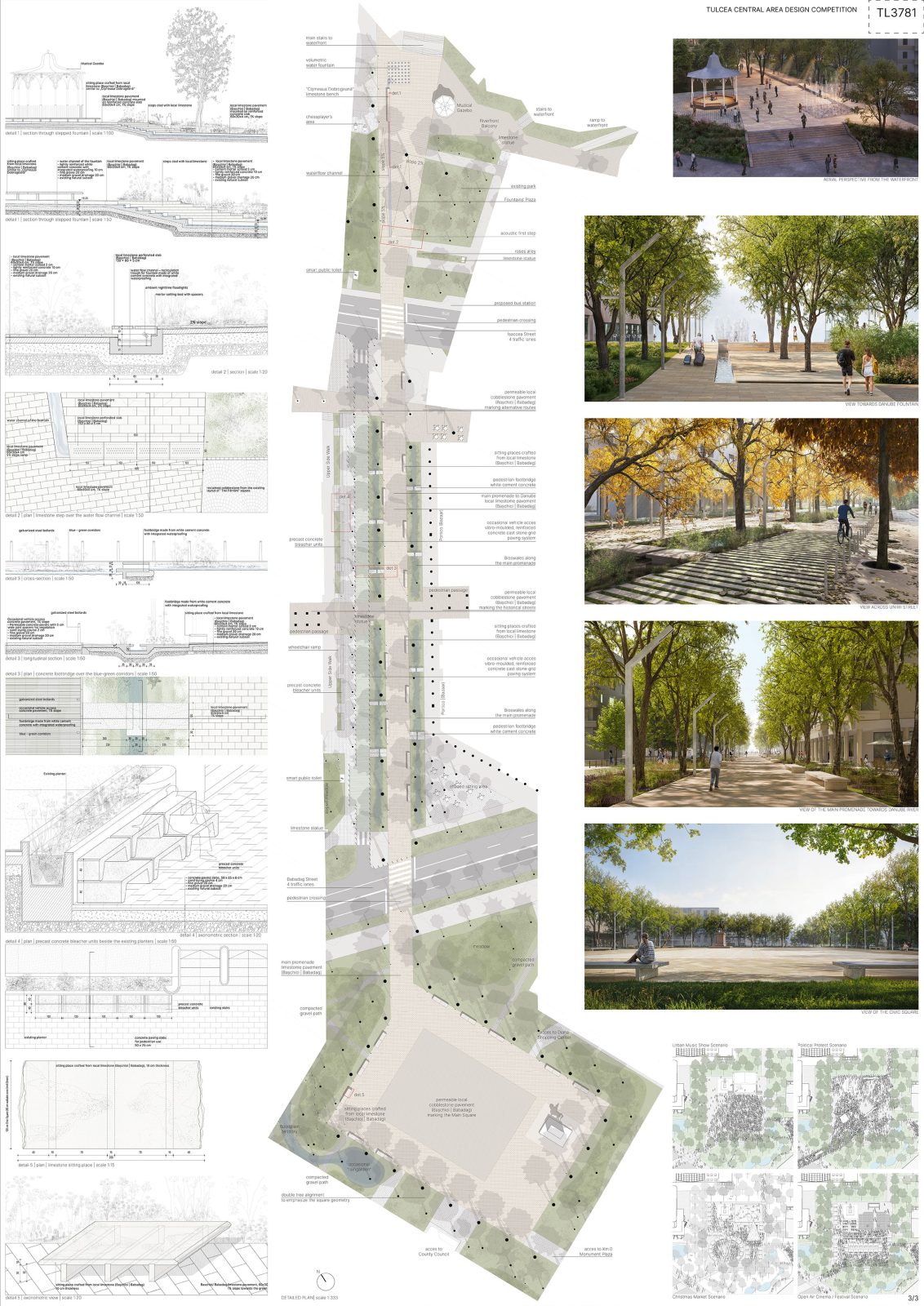
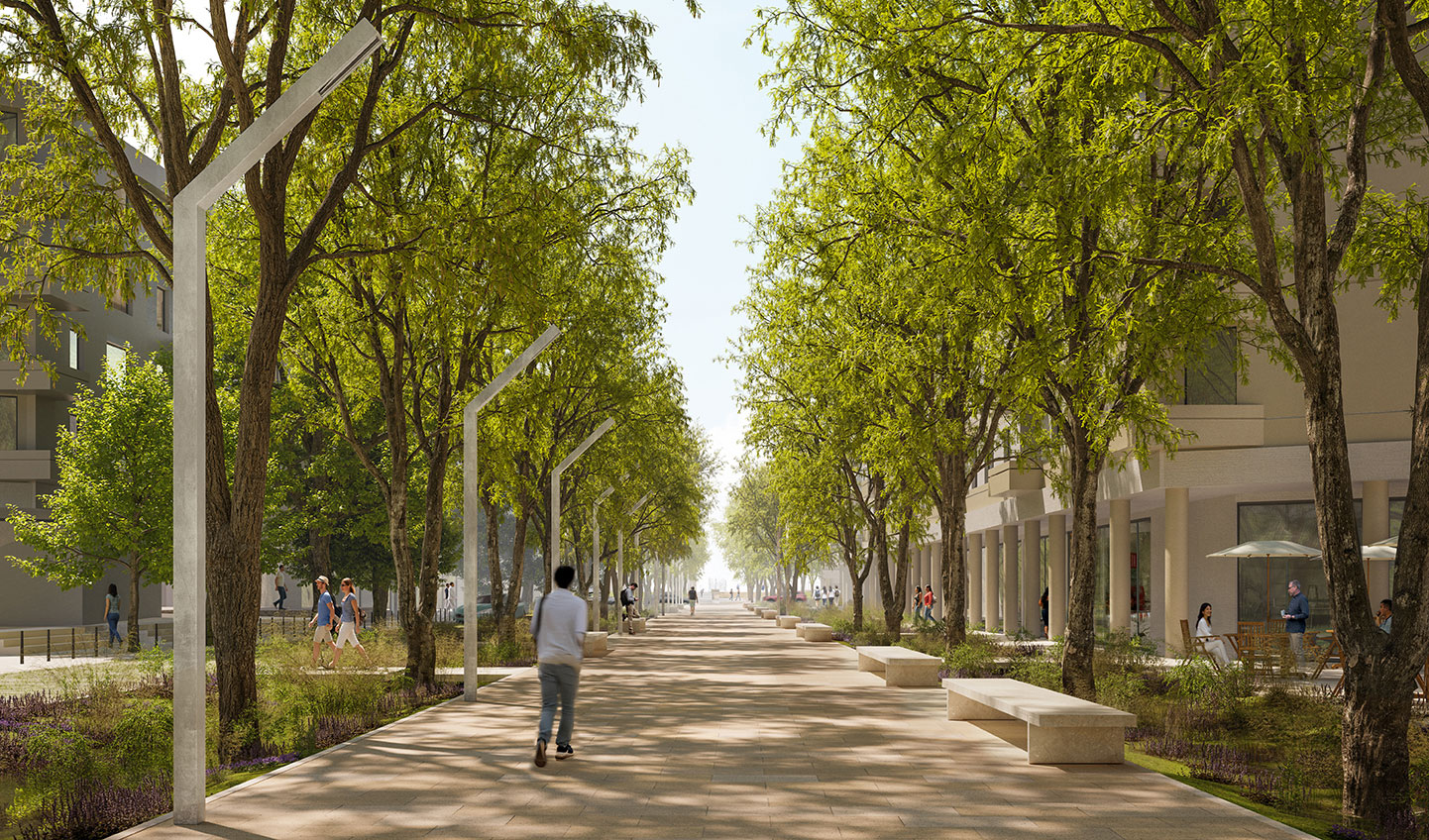
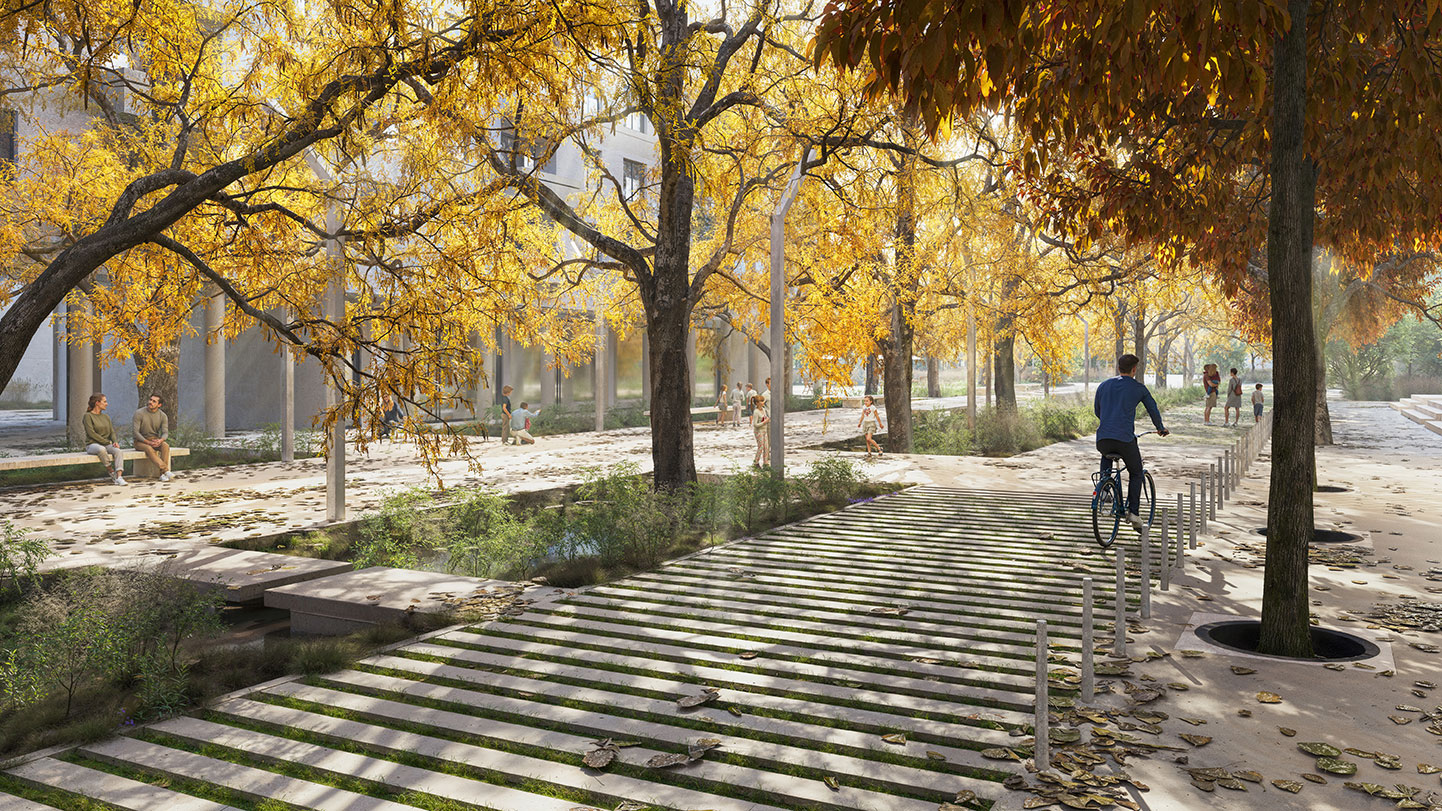
The project also re-establishes a structuring axis oriented toward the Danube, intended to support the multiple activities typical of a city centre — much like what Regina Elisabeta Street represented in the interwar period — a space for both strolling and socializing. These clearly defined spatialities are created using new alignments of climate-resilient trees (Fraxinus angustifolia and Gleditsia triacanthos), a controlled rhythm of street lighting, and limestone paving sourced from local quarries (Bașchioi or Babadag).
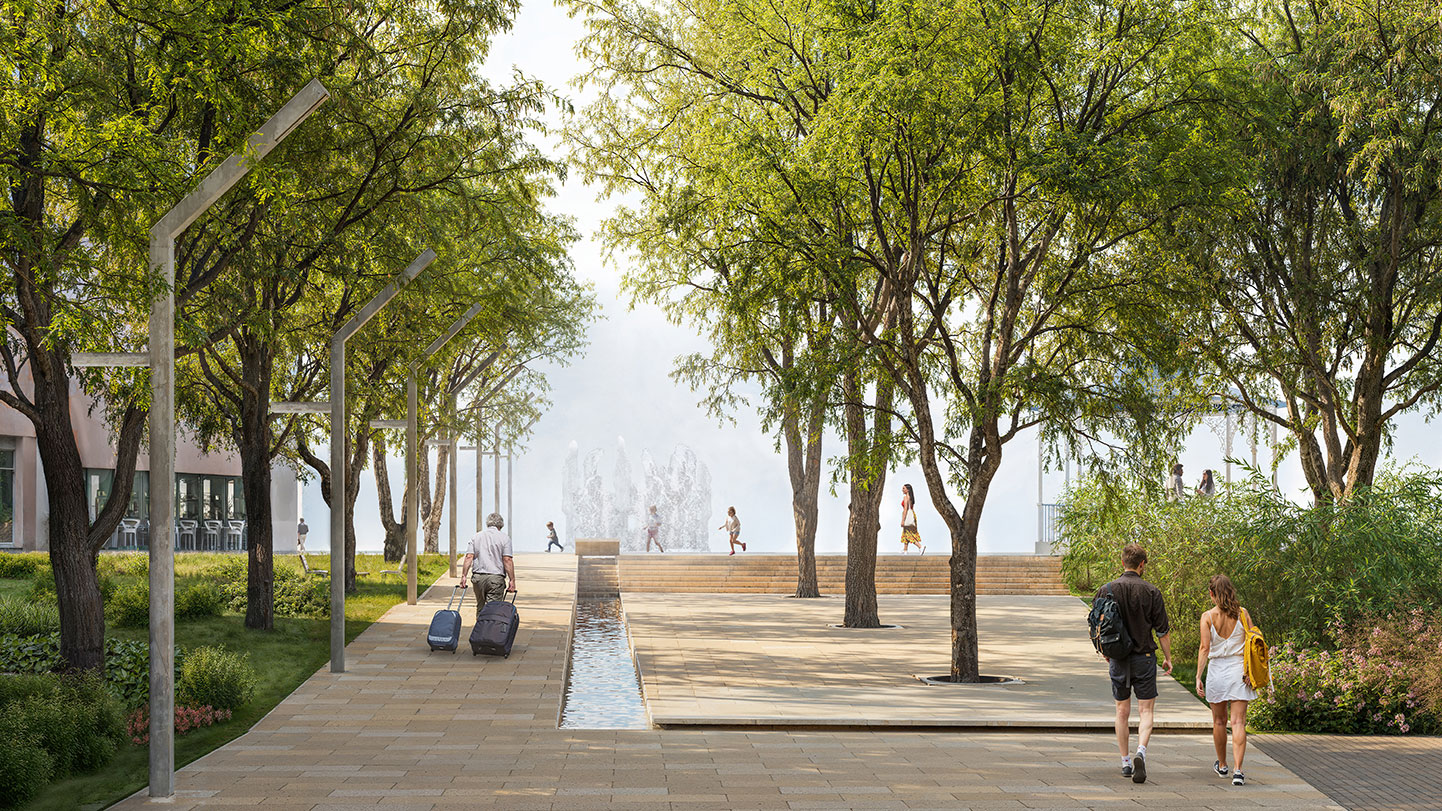
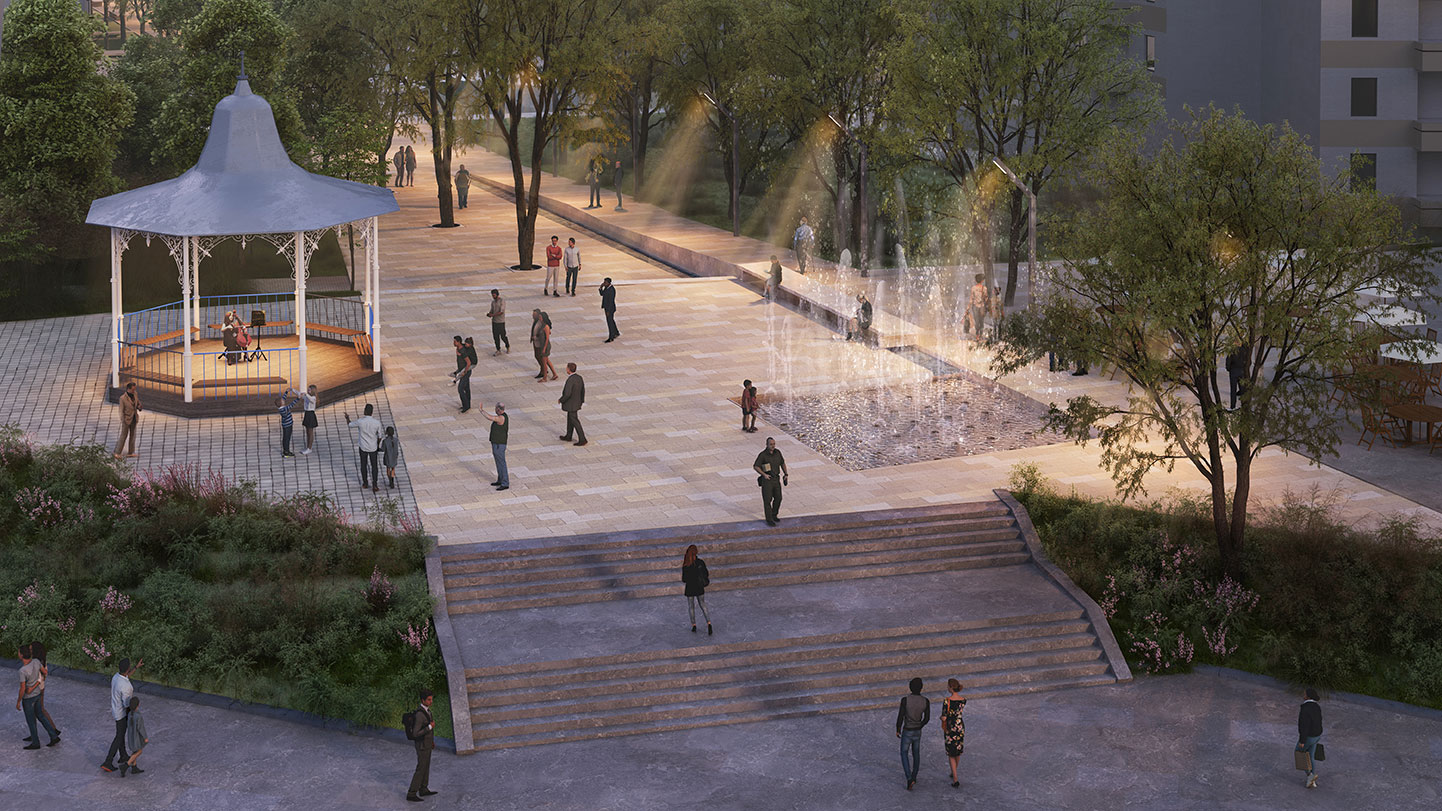
The main square only holds the official identity symbol, the statue of Mircea cel Bătrân, while the remaining unoccupied space remains open and versatile for future civic uses: festivals and concerts, sporting events, seasonal fairs, or even political rallies and contestations. From this square, the pedestrian axis leads to the Danube riverfront, punctuated by rows of trees and lighting elements, flanked on both sides by blue-green corridors offering pleasant shade and humidity during hot summer days.
This pedestrian path echoes the rhythm of the existing portico on the eastern side, which in its turn recalls the rhythm of the old bazaar meandering “between the columns.” The intersection with Progresului Street — formerly St. Nicholas Street — is marked by a cobblestone pavement, a clear invitation to cross the two passageways that lead toward the city’s historic areas.
At the end of this structuring axis, the presence of the Danube is announced by a fountain with a water volume visible from a distance. The level difference between Isaccea Street and the flood wall is resolved through a gentle ramp, adjacent to a smooth stream of water, which — along with the natural shade — forms a small plaza opening to the existing park. At the end of the slope, an esplanade opens toward the Danube. The brass band’s pavilion will be relocated here; also, a long limestone bench will be placed above the flowing water of one of the three fountains — a faded memory of the old fountains once common across the Dobrogea plateau.
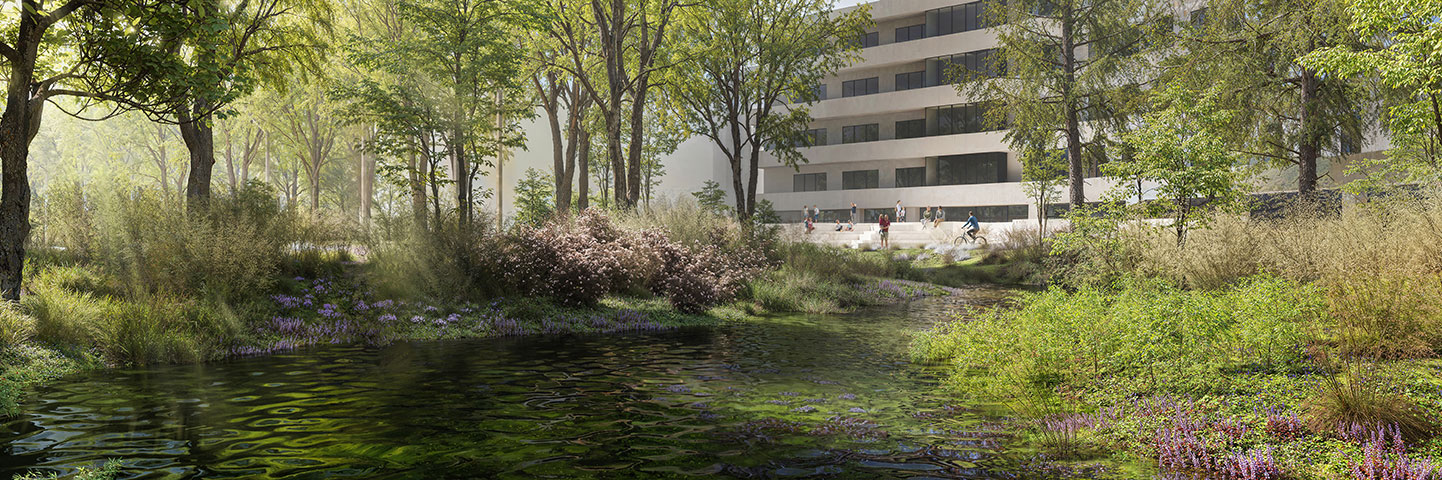
Beyond these important spatial interventions, the proposal also aims to systematically re-naturalize the central area, in line with a broader flood resilience strategy envisioned at the scale of the entire city. Within this new renaturalized territory — shaded and interwoven with multiple pedestrian paths — the existing eight limestone statues will be carefully placed and two mosaic walls located on Babadag and Păcii Streets will also be highlighted. Additionally, a small square is proposed to mark a new city monument: Tulcea’s Kilometer 0.
We believe that these gestures contribute to the creation of a new, strongly identifiable character for the central area — one that is inseparably tied to the subtle yet ever-present proximity of the Danube.