4th Place / 2026
Design competition proposal for the OAR Stand at the UIA World Congress 2026 in Barcelona.
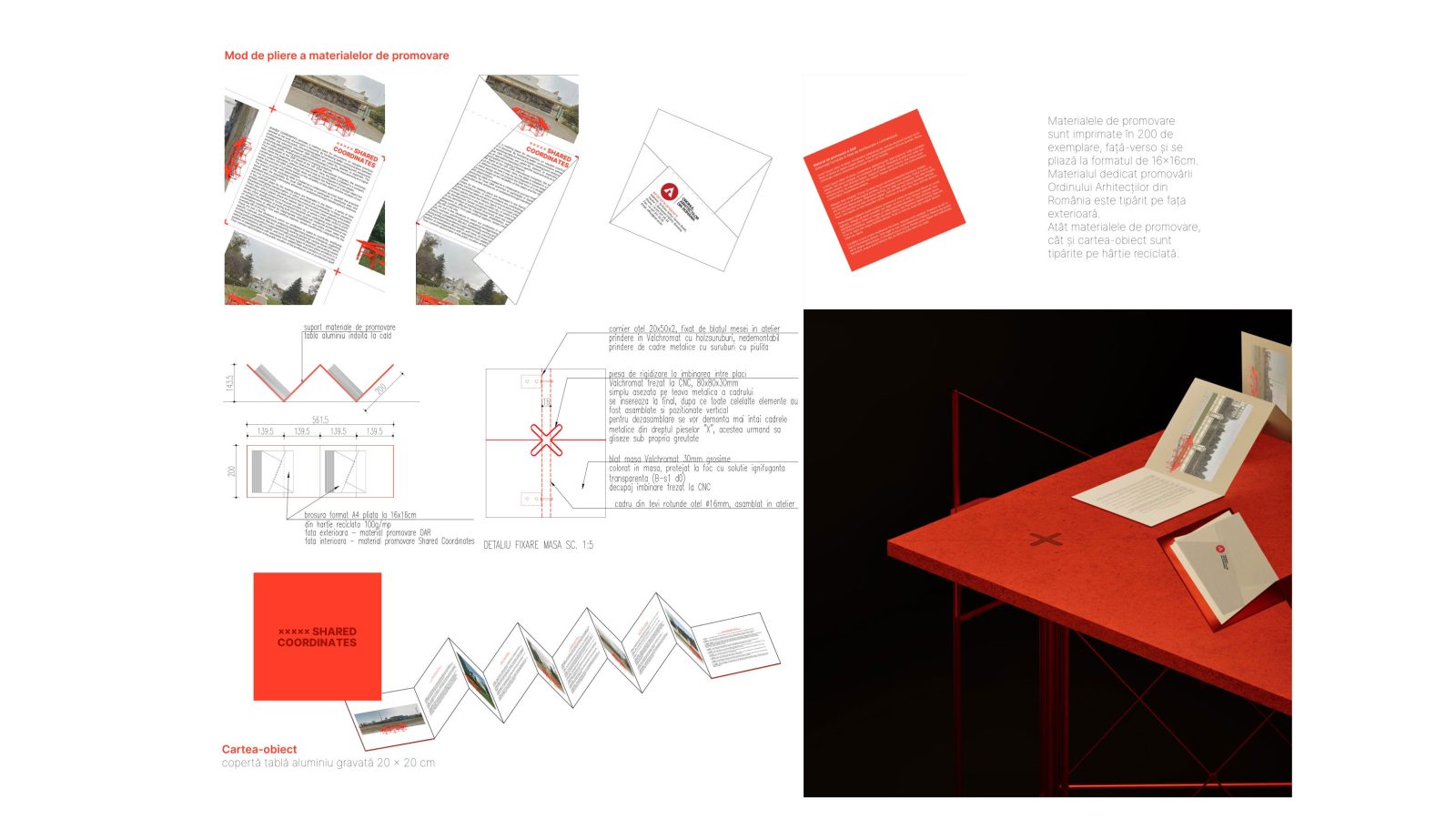
Shared Coordinates provides a meeting place for discussions on valuable practices devoted to the built environment in Romania. By facilitating better communication between professionals and the public, this workshop table serves as a mobile meeting point, temporarily installed and relocated wherever OAR initiatives are called for, desired, or expected. The workshop table gathers groups of specialists interested in a specific issue and acts as a signal to the wider public, inviting participation in ongoing initiatives.
First materialized at the OAR Stand at the UIA 2026 International Congress, the workshop table marks the beginning of this itinerant process. Here, the table is installed in a compact, condensed configuration, different from how it may be reconfigured in future stages.
In this context, the OAR stand design does not present the final form of a design object but rather the promise of a process based on the versatility of this object and the vocation of our profession, pursued with determination.
The itinerary of the workshop table is treated as a collaborative process itself: the proposal leaves open the possibility for local OAR branches to participate in identifying sites and situations that could be discussed, enhanced, or revitalized through interdisciplinary initiatives and civic involvement.
A few potential stops for the meeting place are illustrated in the Stand – a series of sites already undergoing transformation, in which architects are contributing. In these situations, the presence of the workshop table will aid in the communication of phase results to the public. These sites reflect places where the historic fabric has survived urban planning processes, remaining a strange presence in the post-socialist city, or where it has fallen victim to profit-driven urban development; former privatized industrial sites undergoing urban regeneration, resulting in the demolition of existing built structures; post-war modernist architecture at risk of disappearance or affected by inappropriate rehabilitation; and entire urban areas that, perpetuating conditions from past political regimes, remain insufficiently integrated into the everyday life of the city.
These are just a few situations in which our profession is called to contribute, employing specific, nuanced, and diverse tools: preparing heritage listing dossiers (Câmpina), organizing architectural competitions (Bacău), establishing working groups for various issues (Focșani), issuing professional positions supported through cultural events (Mamaia), advocating causes before administrations (Bucharest), and more. All these types of actions place architects in a position of interdependence with specialists from related fields and members of civil society. Their common denominator is the public vocation of the profession and of architecture itself.